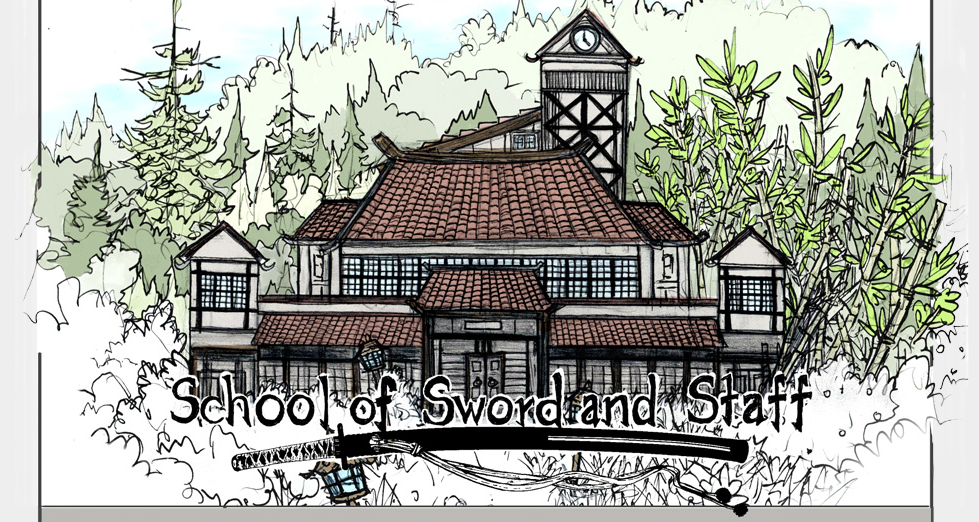
Bushidō literally means “warrior way”. Bushi translates to warrior and Dō translates to way.
Note: The following is my opinion only and you are welcome to disagree.
To elaborate on the meaning of Dō and how common it is, think of the names of various martial arts: Tae-Kwon-Dō, Hap-Ki-Dō, Ai-Ki-Dō, Jeet-Kun-Dō, I-Ai-Dō, etc. and that these are all ways of practicing these arts.
This is to differentiate them from other martial arts: Aikijutsu, Naginatajutsu, Shurikenjutsu, Kenjutsu, Eskrima, which are taught and intended for actual fighting as opposed to majorly being used within the dojo setting, in sports, for fitness and for professional matches.
This is not to say that one cannot use skills learned in Dō martial arts to fight or that there is not significant crossover, just that they have been adapted for different uses unlike their original incarnations.
7 Virtues: Bushidō
Integrity 義 Gi
Honor 名誉 Meiyo
Loyalty 忠義 Chūgi
Respect 礼 Rei
Courage 勇気 Yūki
Honesty 誠 Makoto
Compassion 仁 Jin
Integrity 義 Gi
A warrior, when engaging with others must be honest with them in all their interactions. Engage in the same practice of honesty one would like to experience from others. Listen patiently with an open heart and mind to what others have to say within the realms of honesty, justice and integrity. This does not mean one has to agree with everything others say. It is essential to absorb what is useful.
Honor 名誉 Meiyo
To a warrior/martial artist personal honor is important. Only we as individuals can hear and acknowledge that voice within us that tells us if an action is right or wrong. We as human beings are often our most severe critics. The actions we take and decisions we make reflect on us and reveal who we truly are. Only we can judge ourselves and our intentions.
Loyalty 忠義 Chūgi
To a warrior/martial artist one must accept personal responsibility and be accountable for our words and actions. We alone are responsible for them. Do not attempt to shift the blame to others nor make excuses. Be exceedingly loyal to those whom you care for (family, friends, fellow disciples) and all those whom are under your protection. These are our strongest bonds as human beings and from whom we can derive strength and purpose.
Respect 礼 Rei
A true warrior finds no reason to be cruel towards themselves or others. One does not need to prove their strength, how important they are, how good they are. Knowing one’s own skills and limitations is essential. While we may practice, teach and pass on the skills we have learned there is no need to brag. What is important is that we know. The rest is ego. Be polite to others even if you disagree or are on opposite sides of a conflict. Treat people as individuals. A warrior and martial artist must gain respect by their actions both in battle and in our interactions with others off the battlefield.
Courage 勇気 Yūki
Actively engage in life. If all one does is avoid, issues will keep mounting. It is important to address things one step at a time. Confront life’s challenges but not recklessly. It is important to have “heroic courage”. Do not be afraid to engage the opponent. What will be, will be. One must have the courage, despite ones fear to engage, when necessary or to learn. When one is engaged in a fight or combat one can indeed get hurt and it is risky. Despite this one cannot always avoid a fight or challenging situation. Live life to the fullest, embracing each experience, act as if this were your last day. When engaging in a fight be fully in the moment and embrace Zan Shen. My sensei would often tell me “today is a good day to die, live or die makes no difference, only how you live and how you die makes a difference”.
Honesty/Sincerity 誠 Makoto
When a martial artist or warrior states they will do something it will be done regardless of the obstacles. This is a great ideal to strive for and difficult to achieve. Life will present circumstances that make it difficult to complete a task one has agreed to, or at least delay it. In such cases, a true warrior must put forth their full effort, adapt and be creative in carrying out the task to completion. Being honest and sincere means following through on what one says they will do. When one lives their life in this way giving one’s word and promising to do something becomes unnecessary as those with whom you interact know your character and trust you.
Compassion 仁 Jin
A warrior must train physically, mentally and spiritually. This in turn increases our skills and physical abilities (e.g. speed, strength, reactions). A warrior is not the same as other people. Whereas the general population will spend their time on other activities, a warrior devotes time and energy to training and honing their craft and skills. A warrior must then use the abilities they develop for the good of themselves and others. It is essential we treat our neighbors as ourselves and have compassion for our fellow human beings and to take advantage of opportunities to help them.
 School of Sword and Staff